
From DES to Inclusive Employment Australia
The Disability Employment Services (DES) program has been replaced. Meet Inclusive Employment Australia—the new standard for career support.
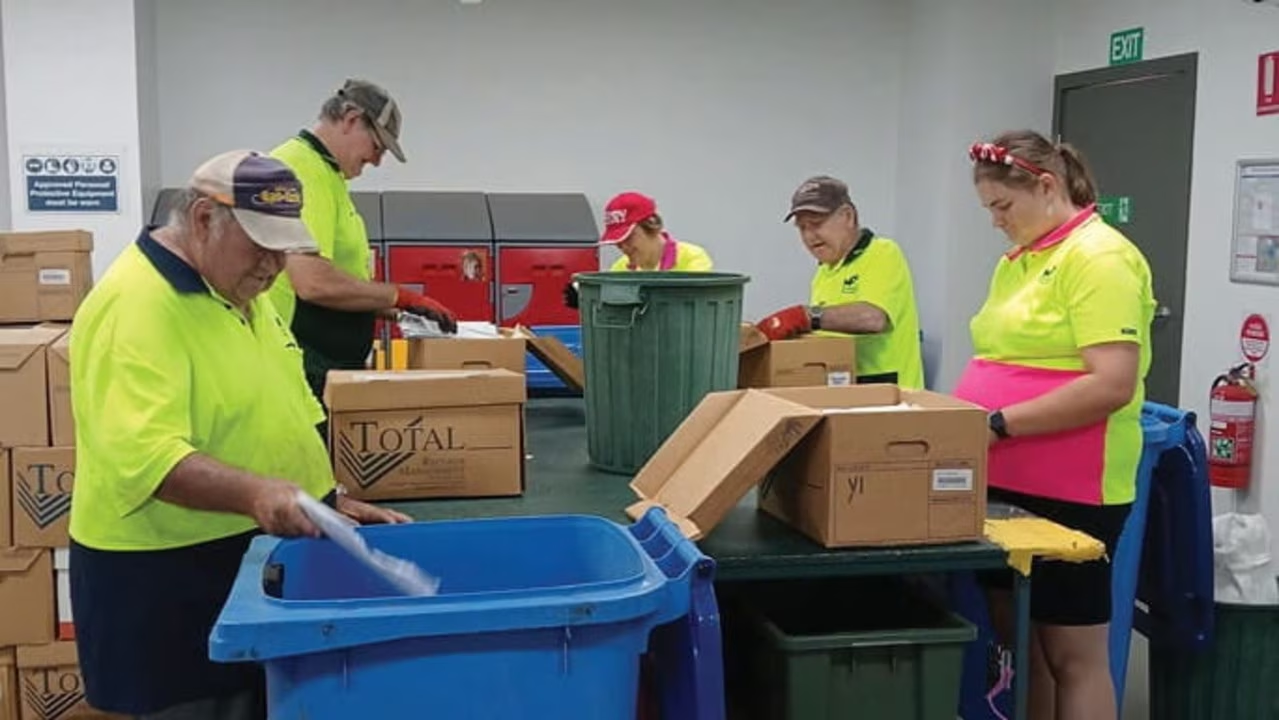
A New Era for Disability Employment
2026 has marked a major reset for disability employment in Australia.
The long-standing Disability Employment Services (DES) program has officially been retired and replaced with Inclusive Employment Australia (IEA) — a reform designed to move beyond short-term job placement and towards sustainable careers and genuine open employment outcomes.
This change recognises what many participants have always known:
getting a job is only the first step. Staying employed, growing skills, and building a career is what truly matters.
Why the DES Model Had to Change
For years, the DES system was criticised for:
- Prioritising quick placements over meaningful roles
- Limited alignment with participant interests and strengths
- Minimal support once employment commenced
Too often, success was measured by whether someone got a job, not whether the job was suitable, sustainable, or led anywhere.
The introduction of IEA signals a shift in how success is defined.
What Is Inclusive Employment Australia (IEA)?
Inclusive Employment Australia is built around the idea that people with disability deserve the same employment opportunities as everyone else — including career progression, workplace inclusion, and long-term security.
IEA focuses on:
- Open employment in mainstream workplaces
- Participant choice and career goals
- Long-term outcomes, not short-term metrics
It is a move from “finding any job” to building a career that lasts.
Key Features of the IEA Model
🧭 Individualised Career Pathways
IEA moves away from one-size-fits-all employment plans.
Participants now receive supports tailored to:
- Their skills, strengths, and interests
- Specific industries they want to work in
- Long-term career aspirations
This approach allows employment supports to align with who a person is — not just what is available.
🏢 Employer Incentives for Inclusive Workplaces
IEA introduces new incentives for employers who actively invest in accessibility and inclusion.
These incentives support businesses to:
- Implement universal design principles
- Improve cognitive accessibility in workplaces
- Adjust systems and environments, not people
This helps shift responsibility away from the individual and onto workplace design, where it belongs.
🤝 Ongoing In-Work Support
One of the most significant changes under IEA is extended in-work support.
Funding now continues beyond job placement to support:
- On-the-job coaching
- Workplace problem-solving
- Skill development and confidence building
- Career progression and promotion opportunities
This recognises that support needs do not stop once a contract is signed.
What This Means for NDIS Participants
For NDIS participants, this reform creates powerful new opportunities.
Employment goals in your PACE plan now carry more weight than ever and can be supported through:
- Inclusive Employment Australia (IEA) supports
- NDIS Supports in Employment
- A combination of both, tailored to your goals
This flexibility allows participants to build a custom career strategy, rather than fitting into a rigid system.
Choice, Control, and Real Careers
The shift to Inclusive Employment Australia reflects a broader change across the NDIS:
- Choice over career direction
- Control over employment supports
- Focus on long-term success, not short-term outcomes
Employment is not just about income — it is about identity, connection, and opportunity.
Looking Ahead
Inclusive Employment Australia represents a new era for disability employment.
One where:
- Careers matter more than placements
- Workplaces adapt, not people
- Support continues as long as it is needed
For participants, providers, and employers alike, this reform opens the door to employment that is not just inclusive — but genuinely sustainable.
And in 2026, that door has finally been opened.
Continue Reading

AI and Assistive Technology in 2026
Exploring the new NDIA framework for AI-enabled assistive technology and how it's enhancing participant independence.
Read More
Decoding the I-CAN v6: Your New Assessment Tool
The NDIA is replacing allied health reports with the I-CAN v6 assessment tool in mid-2026. Understand the 12 support areas that will determine your new budget.
Read More